
Start with the ticket
The booking confirmation lists the allowance you paid for. Personal item, cabin bag, and checked piece are not interchangeable labels. If the fare is basic, the cabin bag you used last year may no longer be included.

Packing is a planning step, not the leftover hour before you leave the house.
We treat the bag as part of the itinerary: the published size, the weight on your ticket, and the items you must still reach after a connection. The work happens at home with a tape and a scale, so the first test is not a rigid frame in a public queue.
Learn MoreThe night-before scramble
Most rushed packing starts earlier than the hallway: a ticket is bought, a route is set, and the bag is still treated as an afterthought. Clothes go in by feel. A second pair of shoes “might be useful”. The zipper closes only if you lean on it. None of that is visible until a sizer or a scale makes it public.
We start from the opposite end. The route tells you how many times the bag will be handled, whether you will see it during a connection, and which published limit actually applies. The list of items comes after that, not before. A sweater that only fits if the lid is forced is not packed; it is a future argument at the counter.
This is slower on the first trip you prepare this way. It is also how you find out at home that the cabin bag you already own is a centimetre over the frame, while there is still time to move a layer into a coat pocket instead of onto a public bench.

Ticket, carrier, connection
Advice copied from a stranger’s trip is not a policy. Cabin size, weight, and what must be screened change with the fare, the aircraft, and the next operator on a connection. We read three sources in a fixed order so the bag is packed for this journey, not for a journey that merely looks similar.
The booking confirmation lists the allowance you paid for. Personal item, cabin bag, and checked piece are not interchangeable labels. If the fare is basic, the cabin bag you used last year may no longer be included.
Published dimensions and weight sit on the operator’s own baggage page, not in a forum thread. We copy the numbers onto paper and keep that sheet beside the bag while we pack, so we are not estimating from memory.
A connection can mean a second operator and a second sizer. The first ticket’s cabin limit does not automatically cover the next one. If the bag has to be collected and checked again, plan for that extra time on the ground.
Allowances are updated. We look again the day before departure, not only on the day we booked. If a number has changed, the bag is adjusted at home, not by unpacking coats onto a counter.
From our own dry-runs
These figures come from trip notes our editors keep after packing for routes they actually take. They are not a promise that your bag will pass. They describe how often we test, how long a home check takes, and how many documents we compare before we call a bag ready.
Packing notes logged from trips we took ourselves, including what failed at a sizer or a scale.
Checks in the home dry-run: measure, weigh, zipper bulge, liquids, cables, papers, and a cabin kit.
Documents compared before departure: ticket, carrier page, connection notes, and a paper copy in the cabin bag.
Minutes a typical hallway dry-run takes once the cardboard frame and kitchen scale are already out.
Connections and delays
A direct trip still has a moment when you cannot open the hold luggage. A connection can add another: collect, reclean the sizer, stand in a second line. Delayed or damaged bags are less common than a stuffed zipper, but they are the reason we refuse to put every essential in the piece you may not see until the next day.
The cabin kit is small on purpose. It is not a second holiday wardrobe. It is the set of things that make the first night workable if the other bag is late: a change of clothes, medication paperwork you already carry, a charger, and the notes for the claim desk. We do not tell you a bag will arrive. We tell you how not to stand in a terminal with empty pockets.
Travelling with children or sharing a load with a companion changes the map again. Duplicate the irreplaceable items across bags rather than stacking them in one “main” suitcase. If that suitcase is the one that misses the belt, nobody should be left without a toothbrush and a shirt.
Keep claim receipts, photos of the closed bag, and a short contents list in the cabin piece before you hand anything over.
One complete change of clothes stays with you. Everything else can wait for the belt.
When two people pack together, split chargers and documents. Convenience in one bag is fragility in a delay.
From the desk
Short field pieces from editors who pack the same way they write: with a tape on the floor and the ticket on the table.
A bag that looks compact on the bed can still fail a rigid sizer by a single stuffed zipper. This walkthrough uses a tape, a kitchen scale, and a cardboard frame cut to published cabin limits so the first test happens in a hallway, not in a queue.
Read Article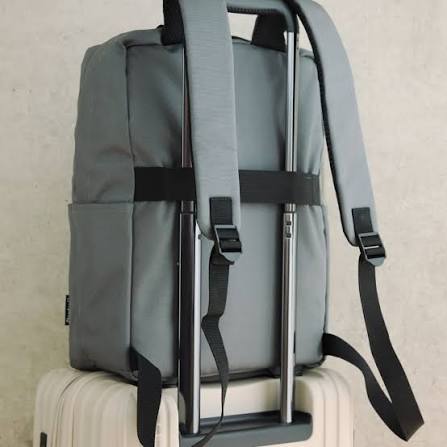
Size is the obvious difference. The useful one is access. We look at what belongs in the bag that stays with you through a connection, a delay, or a night without the hold luggage — papers, a change of clothes, and the charger you cannot replace after the shops close.
Read ArticleAfter the trip
These notes come from consultations, not from staged praise. Each person packed for a real departure and wrote to us about what changed at the counter, in a connection, or when a bag was late.
If a connection, a tight cabin limit, or a shared load is making the packing list harder than it should be, we will sit with the actual documents and the actual suitcase. No invented wardrobe. No promise that a sizer will be kind.
Request a Consultationammioverit unpacks packing as its own stage of trip planning. We read the rules that apply to your route, test the bag at home, and keep a cabin kit ready for the hours you cannot reach the hold luggage.
ammioverit provides knowledge about packing, baggage handling, and the practical checks that sit around a departure. The pages are written so you can prepare with more method than a last-hour pile of clothes. They describe approaches we use and consult on. They are not a substitute for the rules published by the operator on your ticket, and they are not a personal instruction for every route.
Conditions change between trips. Schedules shift. Screening procedures differ from one station to the next. A cabin size that fitted last season may have been updated. Details worth acting on should be confirmed again with the carrier, the terminal, and anyone travelling with you — close to departure, not only at the moment of booking.
Questions about medication, mobility, or how a journey may affect your health belong with a qualified clinician, not with a packing desk. We can talk about where documents live in a cabin bag. We cannot advise on what you should take for a medical condition.
Any decision about what to pack, what to check, or whether to travel is yours. If a bag is refused, delayed, or damaged, the operator’s process on the day is the one that applies. Read our notes, then verify the live rules, then pack. If you want a second pair of eyes on that sequence, you are welcome to contact us .