Liquids That Stay Put: Pack the Pouch So You Do Not Repack at the Tray
The shirt came out of the cabin bag with a dark map on the sleeve. The bottle that made it had survived the bathroom test. It had not survived being stored on its side under a walking shoe. Screening had not started. The damage was already done.
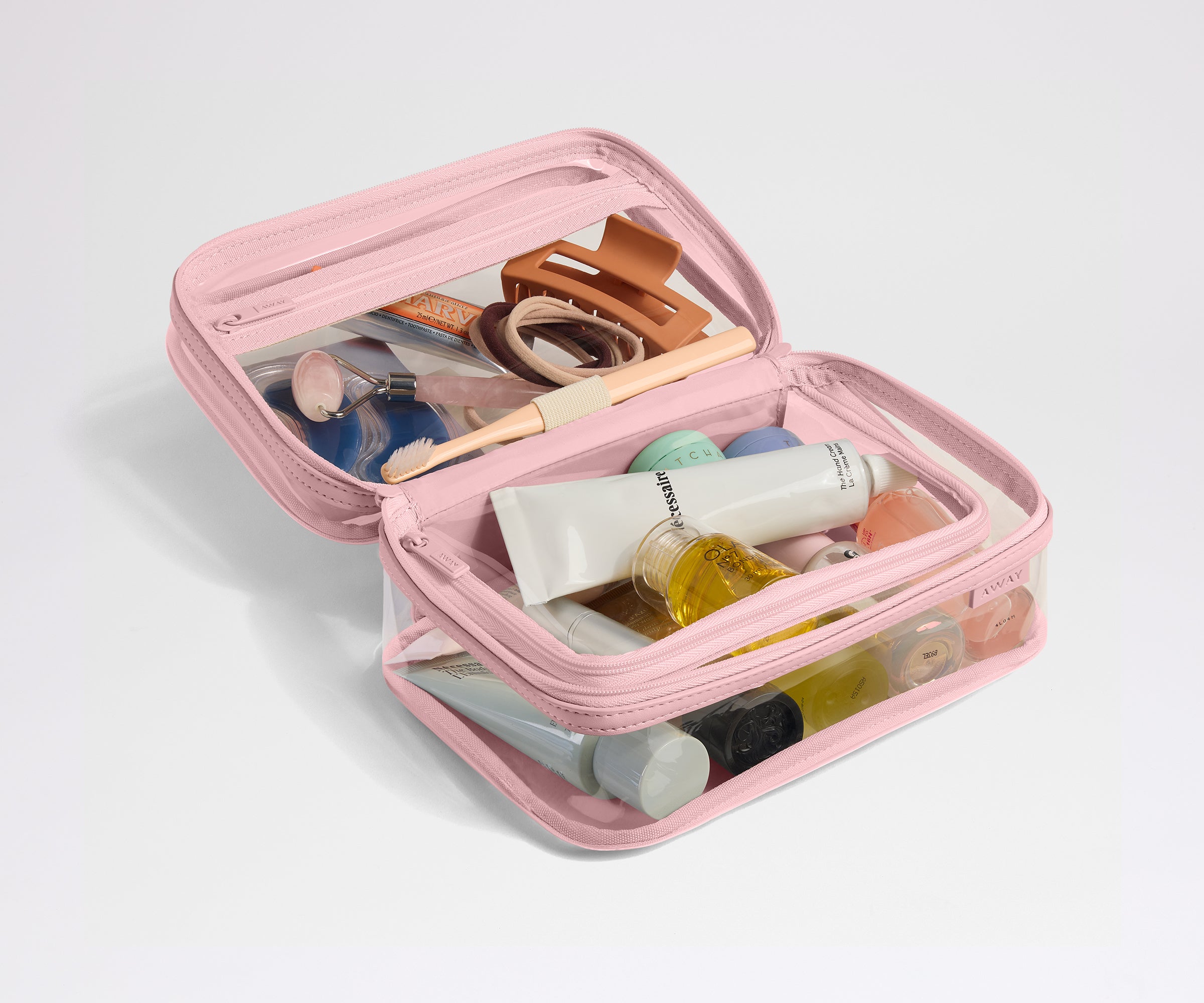
The clear bag is not a second suitcase for bathroom leftovers. It is a small, inspectable set that has to survive two pressures: a tray that gets shoved, and a cabin bag that gets laid flat. Most leaks I see are not cracked plastic. They are a cap left a quarter-turn short, then a pouch stored like a book.
Stand it the way you will lift it
I pack the pouch on a shelf, not inside the bag. Caps face the same way. I press each closure until it stops, then I turn the bottle upside down over the sink for a short count. If a drop appears, it will appear at home. A folded cloth under the pouch is the first surface that will catch a seep before a shirt does.
A pouch that only stays dry while it stands is not packed. It is waiting for the bag to fall over.
What belongs in the clear bag
The operator page on this ticket decides the volume, not the label on a travel bottle from last year. I read the number, then I choose bottles that already fit it. If a favourite cream only exists in a tub that is too large, it stays home or rides in a hold bag I may not open. I do not decant into an unmarked pot and hope a tray officer likes my handwriting.
- Read the liquids rule on the operator page that matches this ticket.
- Choose bottles that already meet that volume. Do not “almost”.
- Cap, invert, wipe. If it weeps, it does not travel.
- Stand the pouch upright. Leave space so it opens without a fight.
- Place the pouch where you can lift it out without unpacking shoes.
What should never share that bag
- A sample you will “tighten later”
- Tools, chargers, or keys that scratch caps in transit
- A full-size bottle with the label turned inward “so it looks smaller”
- Cotton pads that wick a seep across every other item
- Anything you cannot name on a tray without a story
The tray is a public table. If an item needs a story, it does not belong in a bag designed to be emptied in public. I would rather leave a bottle on the shelf than invent a sentence at a desk.
When the pouch has to come out
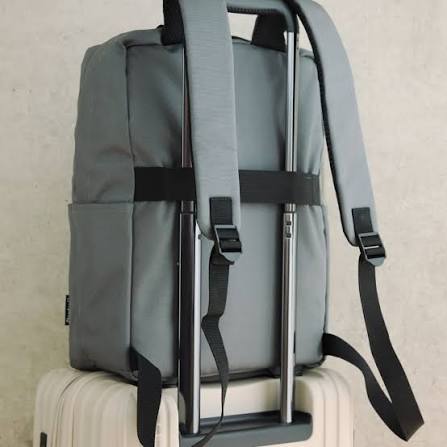
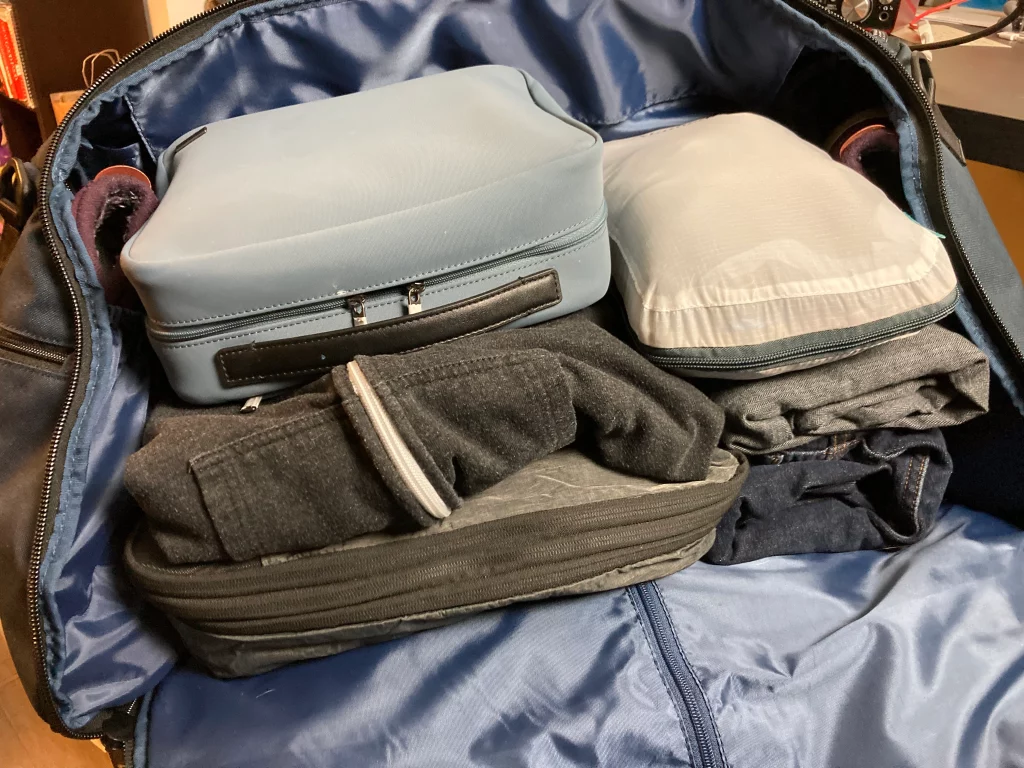
Some desks ask for the bag on the tray. Some do not. I still pack as if they will. That means the pouch sits in an outer pocket or at the top of the cabin bag, not under a rolled jacket. If you have to excavate, you will lay the bag on its side. That is how a standing pouch becomes a puddle.
If two people share one clear bag, one person owns the lift. Shared pouches get yanked twice and recapped by neither. After screening, stand the pouch again before the bag goes on its back in an overhead bin.
I do not promise a dry hallway means a dry aisle. I promise that a wet hallway still leaves you a sink.