Pack from the Route: Drop the Universal List Before You Zip
The hangers were still on the rail and the duffel was already arguing for more. I had started from a list I keep in a notebook: the same blocks I used on a long trip with no connection. This ticket was overnight, with a change of operator and a cabin bag that would see a second opening. The notebook did not know that.
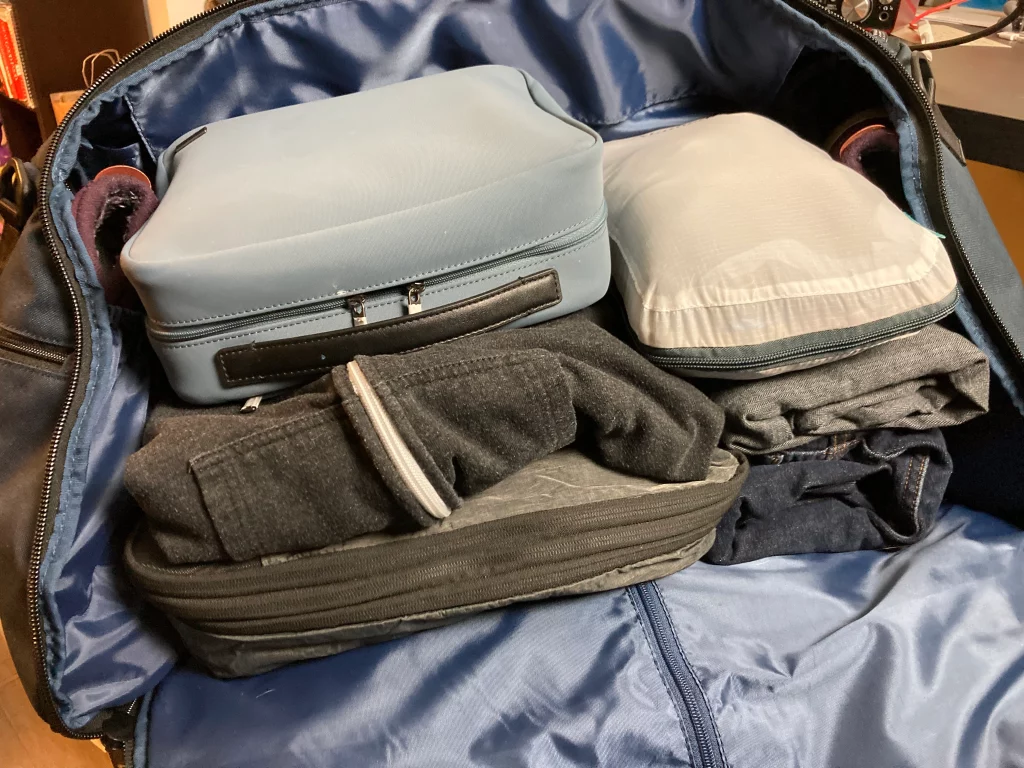
The cupboard will always offer more than the ticket needs. That is its job. My job is to stop treating a leftover hole in the duffel as a request. I put the printout on the floor first. The bag comes second. If I reverse that order, I pack a memory of the last trip and call it preparation.
Start from the old list, then strike
I do not invent a blank page. I take last trip’s list and I cross out what this ticket cannot use. A spare jacket stays if the printout shows a long outdoor transfer. It goes back on the hanger if the day is terminal to terminal. A second pair of shoes stays if walking is the point of the day. It stays on the floor if the only walking is a jet bridge.
A hole in the bag is not a question. It is leftover space after the route has spoken.
Questions the printout can answer
I ask the ticket, not the cupboard. The answers are ugly and useful. They tell me how many nights the hold piece is gone, whether a second operator will open the cabin bag again, and which layers I will actually wear between doors. Anything the printout does not mention has to earn its way back in.
- How many nights will you sleep before you can open the hold bag?
- Does a connection put the cabin bag through a second opening?
- Which layers will you wear between doors, not “if the weather turns”?
- What did the old list pack that this printout never mentions?
- What can stay on a hanger until the bag is otherwise closed?
What the old list sneaks back in
- Spare shoes for a day that is all indoor floors
- A heavy layer for a transfer that is only a jet bridge
- Extra copies of papers already in the cabin kit
- “Maybe” shirts that never leave the hanger on arrival
- A gadget packed because the duffel still looked empty
I used to keep the “maybe” shirts in the bag because folding them felt like a decision. Leaving them on the hanger is the decision. If I need a third shirt, the ticket will have said so: a longer stay, a day I cannot do laundry, a dress code written on the booking. None of those appeared on this printout. The shirts stayed.
Zip only after the hanger is honest
When I am unsure, the item stays on the rail while I pack the rest. If the bag closes without it, the hanger won. If the ticket actually uses it, I add it and only then look at zippers and weight. Those checks are a different job. This job is to stop feeding the bag a list that belongs to another itinerary.
If two people pack from one household list, split the printout. One person’s seated day is not the other person’s walking day. Shared extras are how a duffel fails an opening that neither person needed.
The old list still helps as a memory of what you forgot last time. Use it as a prompt, then force each item through the printout. If the ticket does not create a use, the item stays home.
I do not tell you the old list is useless. I tell you it is a first draft, and a first draft should not be zipped.